

Vibration injuries are the most common type of occupational ill-health, according to statistics from Afa Insurance. Approximately 200 cases a year are registered as work injuries, mainly among men. High-risk personnel are construction and industrial workers, but onboard employees are affected when working with grinders, needle descalers or chisel hammers used to remove rust. In 2023, the Swedish Work Environment Authority started a three-year project to increase knowledge of vibrations and how to prevent vibration injuries. Daniela Profir is working on the project, which will continue throughout the current year.
“We see vibration injuries as a hidden health and safety issue,” she says. “Those who use vibrating hand-held machines or tools do not always understand that the discomfort they experience in their hands and arms comes from the tools they are using, and even if they do, there are many who choose to put up with it and continue working anyway. Employers do not always take their responsibility and inform personnel about the risks or purchase better machines that vibrate less.”
Employers do not always take their responsibility and inform personnel about the risks or purchase better machines that vibrate less.
 Employers do not always take their responsibility and inform personnel about the risks or purchase better machines that vibrate less.
Working with vibrating hand-held machines can cause damage to nerves, blood vessels, muscles, joints and bones. Initially the problems are undramatic and often start with tingling and numbness in the hands. How quickly this turns into a permanent injury cannot be said, but it is related to how much the machines vibrate and how long they are used for, among other factors. According to statistics from Afa Insurance, almost half of those injured are younger than 46.
“Vibration injuries are insidious. You may find it difficult to grip objects, drop things, have no sense of touch, not feel the difference between hot and cold, and have problems tying shoe-laces. Unfortunately, once an injury has occurred it is permanent,” says Daniela Profir.
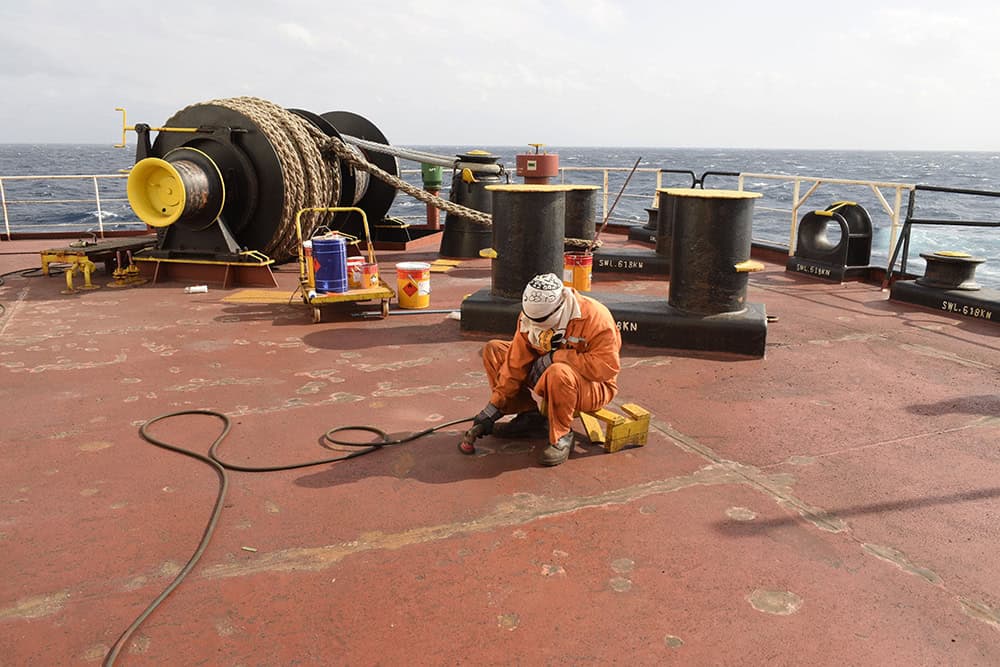
But it is possible to reduce the risk of suffering from vibration injuries. Daniela Profir points out that those who plan work need to know the regulations related to operations with vibrating tools.
“A good start is to read the instruction book to see what vibration value the manufacturer claims. Then you can download the vibration calculator from the Work Environment Authority website. It calculates daily vibration exposure and shows employers when it is time to take measures under the regulations,” says Daniela Profir and continues.
“Sometimes you can’t work for more than 30 minutes before the limit is reached, which is usually too little time for the job to be finished. If you can’t solve the issue through work rotation, you need to use machines with lower vibration levels and look over which accessories are used.”