
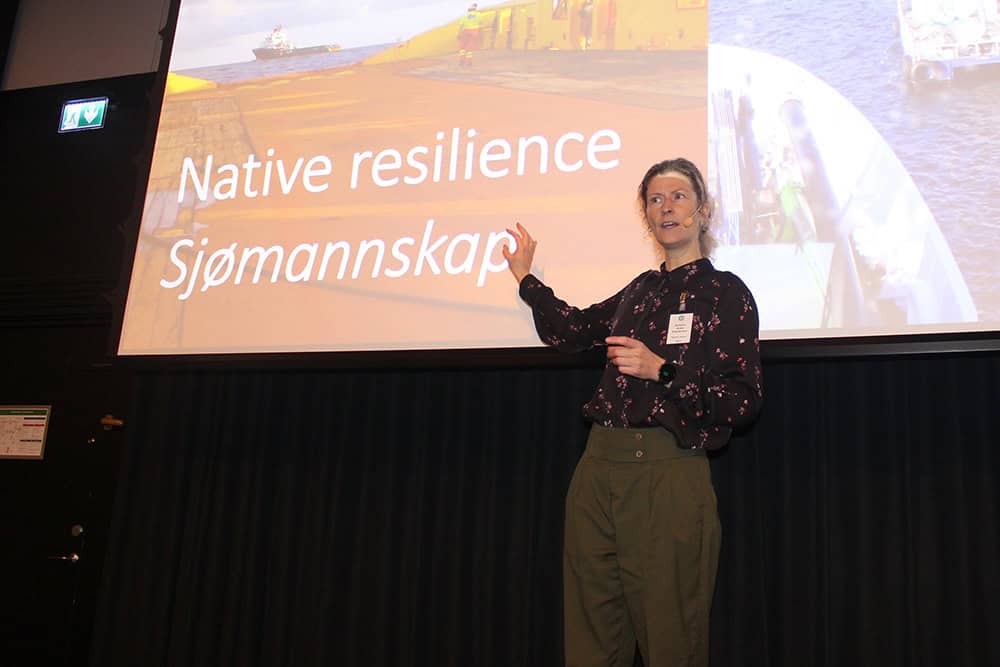
Safety Management – Bullshit, Bureaucracy and the Best we have. That was the title of the last speech at the SAN conference given by Kristine Vedal Størkersen, a maritime safety researcher from Norway. She started by saying that the safety regulations that have appeared with ISO standards and the ISM code (International Safety Management code), which set common standards for management and operation in shipping, have made a big difference to maritime safety. They have made shipping companies invest in safety and maintenance equipment, and safety work on board has become more systematized. As an example of how bad things can get if a functioning safety organization is not in place, Kristine Vedal Størkersen cited the disaster on the Scandinavian Star, a ropax ferry which caught fire during a crossing from Oslo to Fredrikshamn in April 1990 causing the deaths of 159 people.
“There were many faults in the technical equipment, the crew had received very little training and no time had been given to safety drills,” she said. “Nor were there any procedures for dealing with a fire on board.”
It is good to have more freedom, but it assumes there is enough knowledge to meet the requirements.
 It is good to have more freedom, but it assumes there is enough knowledge to meet the requirements.
Kristine Vedal Størkersen also stated that regulations and requirements from authorities do not necessarily lead to increased safety, either. Compliance and inspection systems sometimes lead to more time being spent on making documentation look good before an inspection, rather than trying to create real improvements.
“The whole point of rules is to make something better, but it often becomes more important to create systems that are easy to audit and look good during an inspection than actually creating a good, safe work environment,” she said. She talked about other problems in safety management such as very detailed regulations, procedures that do not correspond to the work being performed, rules that are contradictory and compliance that requires even more time and personnel than are available. She also described systems with function-based rules and self-monitoring that have been introduced in recent years. According to Kristine Vedal Størkersen, these types of safety systems can be problematic.
“It is good to have more freedom, but it assumes there is enough knowledge to meet the requirements. And if an accident does occur, you will probably be accused of something missing in your safety system,” she said.